
HEP software costs can look simple on the surface: a monthly fee, maybe a free plan, and a pricing page that promises everything you need. But most physical therapy clinics don’t realize how quickly those costs change once real patients, real workflows, and real growth enter the picture. What looks affordable in month one can quietly become expensive by month six.
In 2026, HEP software costs are shaped less by flashy features and more by how well the platform fits into everyday clinical reality. Patient limits, clinician seats, engagement tools, and progress tracking all influence what clinics actually pay over time.
This guide breaks down what home exercise program software really costs, what drives those prices, and how physical therapists can judge value before committing long-term.
HEP software costs explained for modern physical therapy clinics
HEP software costs are no longer just for access to an exercise library. The price of services at modern physical therapy clinics depends on how well the software helps with patient education, continuity of care, and therapist efficiency. Some platforms only help with basic home exercise delivery, while others help with ongoing patient engagement, tracking progress, and therapist oversight between visits.
Many clinics think that the price of HEP software is based on a flat monthly fee. In real life, costs go up when more patients come in, more doctors join the team, or features like branded patient portals and progress analytics are needed. The difference between a basic tool and a mature platform usually isn’t in the price at first, but in how well the software works with real-world clinical workflows.
What factors actually drive HEP software pricing
There are a number of structural factors that affect the cost of HEP software, and most price differences can be traced back to these core factors rather than brand names or marketing tiers.
It’s helpful to know what you’re really paying for before you look at pricing pages.
| Pricing Factor | How It Affects Cost |
| Patient limits | Software that caps active patients often becomes more expensive as clinics grow |
| Clinician seats | Per-user pricing increases costs for multi-provider practices |
| Exercise delivery | Generic libraries cost less than systems that support custom exercise prescriptions |
| Progress tracking | Adherence monitoring and reporting typically raise base pricing |
| Patient portal access | Secure portals with reminders and messaging add to the overall cost |
| Custom branding | White-label or branded experiences are rarely included in low-cost plans |
Understanding these variables makes pricing comparisons clearer and helps clinics avoid surprises once patient volume increases.
Typical HEP software cost ranges in 2026
Most physical therapists fall into one of three pricing tiers depending on functionality and clinic size.
Average HEP Software Cost Ranges
| Software Tier | Estimated Annual Cost | Typical Capabilities |
| Entry-level | $0–$100 | Basic home exercise programs, limited customization |
| Mid-range | $150–$400 | Patient portals, reminders, progress tracking |
| Advanced | $500+ | Custom branding, analytics, and scalable patient management |
These ranges reflect industry averages rather than list prices. Clinics often pay more once they exceed patient caps or require additional users.
Free vs paid home exercise program software
The gap between free and paid home exercise program software is not only about features; it often affects patient follow-through and therapist workload.
Free tools usually focus on basic exercise assignments. Paid systems expand on that foundation by supporting communication, feedback, and visibility into patient progress.
| Aspect | Free Software | Paid Software |
| Exercise programs | Limited templates or static routines | Flexible, customizable programs |
| Patient engagement | Minimal interaction | Reminders, feedback, progress views |
| Therapist oversight | Little to no tracking | Adherence and activity monitoring |
| Scalability | Suitable for very small caseloads | Designed for growing clinics |
| Support | Minimal or community-based | Dedicated support and updates |
For clinics managing more than a small number of patients, the difference often becomes apparent within a few months of use.
How HEP software impacts patient engagement and adherence
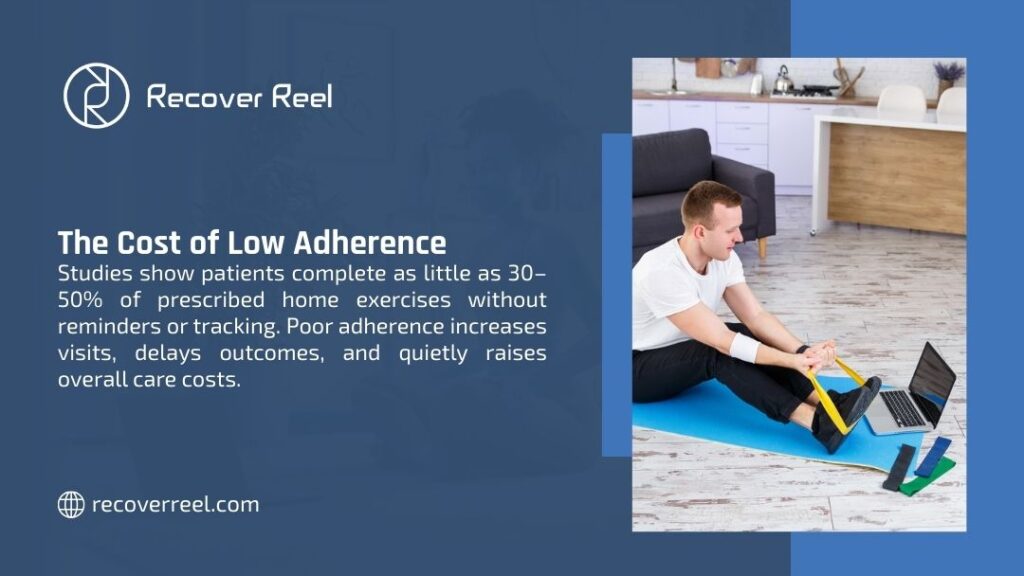
Patient engagement plays a quiet but decisive role in the value of HEP software. When patients receive clear instructions without reinforcement, adherence tends to decline over time. Software that closes this gap does so by making expectations visible and progress measurable.
Tools that allow patients to view therapist-prescribed exercises, receive reminders, and track completion create a sense of accountability. From a clinical standpoint, this visibility helps therapists adjust care plans sooner rather than waiting for the next in-person visit.
Over time, improved adherence supports better outcomes, particularly for patients completing physiotherapy at home or following long-term rehabilitation programs.
Cost comparison by clinic size and use case
The right HEP software cost depends heavily on the clinic structure.
Estimated Annual HEP Software Costs by Clinic Size
| Clinic Type | Typical Annual Spend |
| Solo physical therapist | $100–$250 |
| Small clinic (2–5 PTs) | $300–$800 |
| Growing practice (6+ PTs) | $1,000+ |
As clinics grow, software that limits patient accounts or requires multiple logins becomes expensive in less obvious ways. Time lost switching tools or managing workarounds adds indirect cost that rarely shows up on a pricing page.
Where hidden costs appear in physical therapy software
Some of the most expensive aspects of the software never appear in the initial pricing. These costs often emerge as clinics scale or adjust their workflows.
Before committing to a platform, clinics should account for common add-ons and indirect expenses.
| Hidden Cost Area | Why It Matters |
| Additional patient access | Fees increase as active patient counts rise |
| Extra clinician logins | Per-seat pricing adds up in group practices |
| Limited customization | Paying extra for branding or personalization |
| Workflow gaps | Time spent compensating for missing features |
| Training time | Complex systems reduce clinical efficiency |
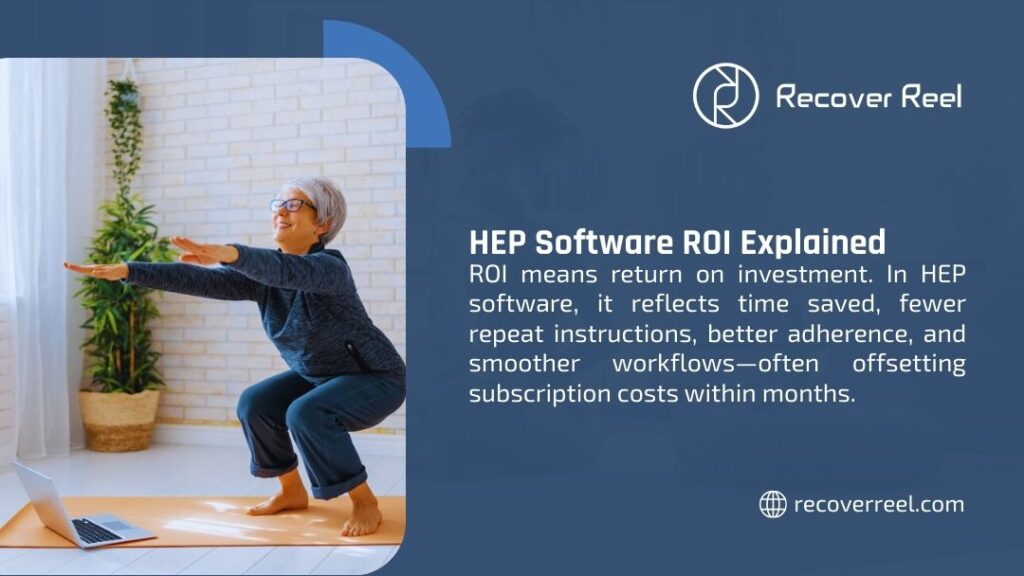
These costs may not show up immediately, but they influence long-term return on investment more than the base subscription fee.
Choosing HEP software based on value, not sticker price
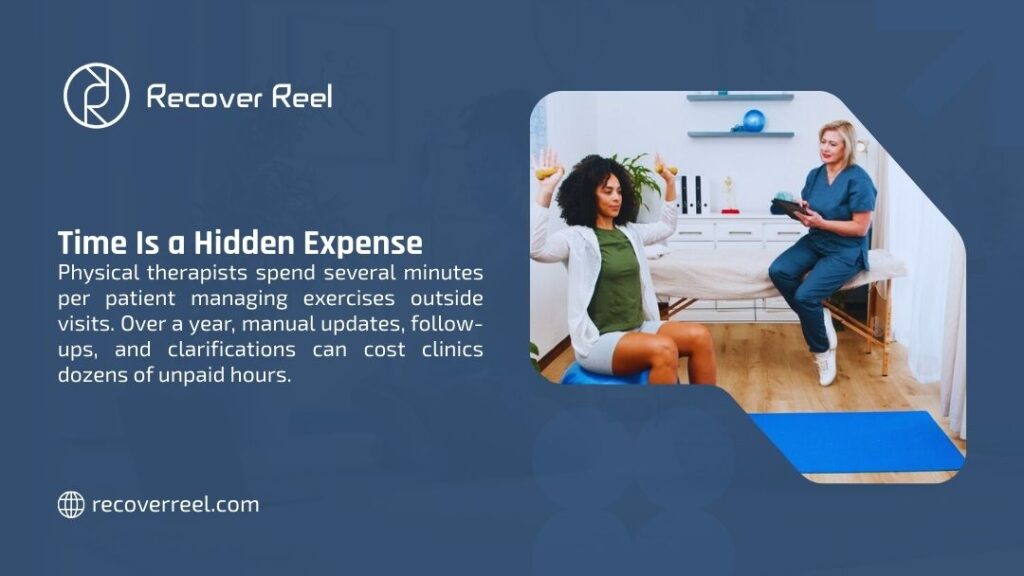
Sticker price alone rarely reflects the real cost of the software. A lower monthly fee may appear attractive, but value depends on how well the system supports patient care and therapist efficiency over time. Software that reduces follow-up questions, improves adherence, and centralizes home exercise management often offsets its cost through smoother workflows.
Clinics benefit most when pricing aligns with actual usage rather than arbitrary limits. Evaluating value means looking at how the software supports patient education, simplifies exercise delivery, and scales alongside the practice. When those elements align, HEP software becomes part of care delivery rather than an added administrative task.
Where does this leave your clinic?
HEP software costs in 2026 aren’t just about numbers. They reflect how physical therapy continues to evolve toward connected, patient-centered care. If you’re evaluating options or reassessing what you pay today, start with transparency and long-term value.
Clinics interested in a clearer, more patient-focused approach can explore Recover Reel’s platform, review pricing details, or contact us directly to see whether it fits their workflow.