
Hybrid and online care have changed how rehabilitation professionals manage patient exercise programs outside the clinic. This guide explains how HEP software for hybrid/online physical therapy works, which features matter most, and how to choose the right platform. You will also find a detailed comparison of the leading tools used by modern practices.
HEP software for hybrid/online physical therapists
Hybrid care blends in-person treatment with remote follow-ups. That model has grown steadily since telehealth adoption accelerated during the COVID-19 era. According to the U.S. Department of Health and Human Services, telehealth utilization increased more than 63-fold in 2020 compared to pre-pandemic levels, reshaping how clinicians deliver care outside traditional settings.
For physical therapists, this shift created a practical challenge: patients still need structured home exercise programs even when visits happen partly online. Without clear guidance and coaching, many patients struggle to maintain consistency and motivation with their rehab plan.
A home exercise program (HEP) platform solves that problem. It allows therapists to prescribe exercises digitally, deliver demonstration videos, and monitor adherence between visits. Modern HEP software for hybrid/online physical therapists usually includes a patient-facing mobile app where individuals review instructions and mark exercises complete.
Why hybrid practices depend on a HEP platform
Traditional paper handouts rarely support remote care effectively. Patients forget instructions, lose printed programs, or misunderstand how movements should be performed. Digital HEP platforms solve those gaps in several ways.
First, they help keep patients engaged. Many tools deliver exercise videos that demonstrate movement patterns clearly. When patients can review those instructions at home, they tend to follow their program more consistently.
Second, therapists gain visibility into progress. Most HEP software records when patients complete exercises and allows clinicians to adjust prescriptions without scheduling another appointment.
Third, communication improves. Secure messaging features make it easier for therapists to answer questions or modify programs when symptoms change.
Research supports the importance of adherence. A systematic review reported that adherence to home exercise programs in musculoskeletal rehabilitation can vary widely, often falling between 50% and 70% depending on patient support and monitoring. Better tracking and feedback tools are, therefore, critical.
What hybrid and online PTs actually need from hep software
Not every HEP platform supports hybrid workflows equally. Some tools focus heavily on pre-built exercise libraries, while others prioritize customization and patient interaction. Hybrid physical therapists typically look for the following capabilities.
A reliable HEP software platform should allow therapists to record exercise videos or upload their own demonstrations. Custom content ensures patients see movements performed exactly as prescribed.
The software should also include a patient mobile app. A well-designed mobile interface makes it easier for patients to review exercises, log progress, and communicate with their clinician.
Progress tracking is another essential element. When therapists can see whether exercises are complete, they can identify compliance issues early and intervene before setbacks occur.
Finally, privacy matters. Any platform used in healthcare should follow HIPAA guidelines to protect patient health information. The U.S. Department of Health and Human Services outlines HIPAA privacy requirements for electronic health data.
Key features that keep patients engaged between visits
Between sessions, engagement usually rises or falls on whether the plan feels clear, doable, and easy to follow on a phone. The strongest HEP software for hybrid/online physical therapists pairs simple delivery with feedback loops that help patients stay consistent.
| Feature | What it does for engagement between visits | Why hybrid/online PTs care |
| Patient-facing mobile experience | Makes the plan easy to access anywhere, so patients don’t lose the program | Hybrid schedules often shift; the plan still needs to live in one place |
| Exercise videos with clear cues | Reduces confusion and improves confidence and compliance | Video clarity matters more when you’re not watching every rep |
| Reminders and alerts | Helps patients stick to routine and frequency targets | Consistency is the weak spot for most home programs |
| Adherence and progress tracking | Shows whether exercises are completed as prescribed and where drop-off occurs | It turns “How’s it going?” into measurable data |
| Symptom/pain/difficulty check-ins | Captures friction points early and guides program adjustments | Hybrid care relies on timely adjustments without extra visits |
| Secure messaging or chat | Keeps patient questions from turning into skipped sessions | Quick feedback prevents “I wasn’t sure, so I stopped.” |
| Templates and fast program edits | Makes updates quick when plans change week to week | Hybrid care often requires frequent micro-progression to keep patient engagement |
When those pieces show up together, HEP software for hybrid/online physical therapists stops feeling like extra tech and starts acting like the bridge between appointments.
Best HEP software for hybrid/online physical therapists (2026)
Hybrid rehabilitation models require tools that work just as well outside the clinic as they do during in-person visits. For that reason, many clinicians now rely on HEP software for hybrid/online physical therapists that combines exercise delivery, patient engagement, and progress monitoring in one place.
The following platforms represent some of the most commonly discussed options in the rehabilitation technology space. Each tool approaches the home exercise program (HEP) workflow differently, so understanding the strengths and trade-offs can help clinics choose the right fit.
1. Recover Reel
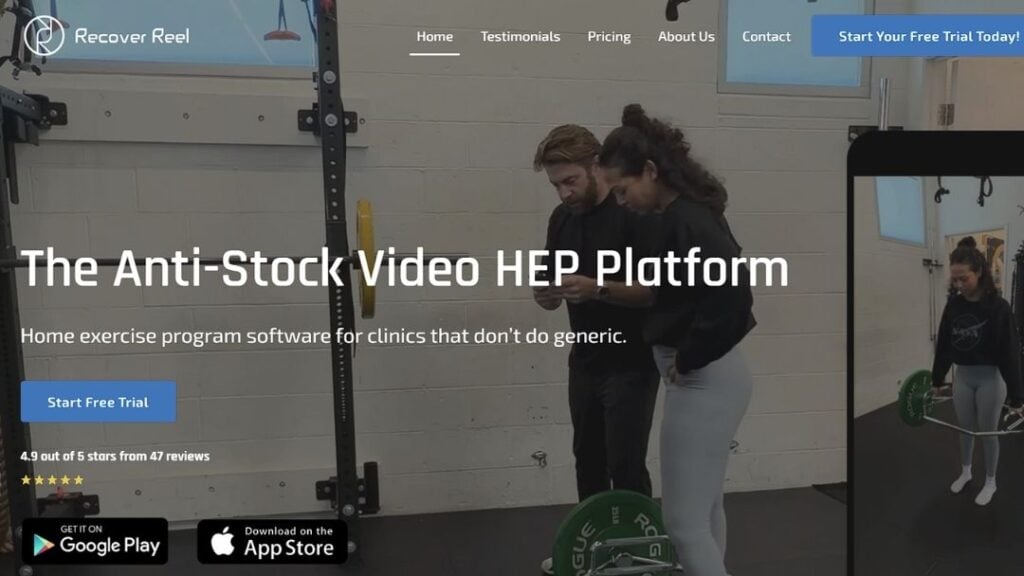
Recover Reel is a mobile-first HEP platform designed around custom exercise videos recorded by therapists themselves. Instead of relying primarily on large pre-loaded exercise libraries, the platform allows clinicians to quickly record demonstrations and send them to patients through a patient-facing mobile app.
This approach appeals to therapists who prefer to maintain full control over the exercises they prescribe. The software also includes adherence tracking, reminders, and program templates that allow clinicians to update programs quickly during hybrid care workflows.
Best for: PTs who want to record their own exercise demonstrations rather than relying on stock libraries.
Why choose this platform: Hybrid care often requires therapists to adjust programs between appointments. A mobile-first interface makes it easier to create and send new exercise instructions without returning to a desktop system.
| Pros | Cons |
| Custom therapist-recorded exercise videos | No pre-loaded exercise library |
| Mobile-first workflow designed for quick updates | Fewer integrations than large clinical systems |
| Simple interface for small to medium clinics | May not suit very large hospital networks |
| Patient engagement tools and progress tracking | Still growing ecosystem |
2. Medbridge

Medbridge is one of the most widely recognized platforms in the rehabilitation industry. It combines HEP software, continuing education, and patient engagement tools into a single ecosystem used by many clinics and healthcare organizations.
The platform includes a large exercise library with professionally produced demonstration videos. Therapists can build home exercise programs quickly using templates and deliver them through the Medbridge patient portal or mobile app.
Best for: Clinics that want a large pre-built exercise library and integrated continuing education.
Why choose this platform: Many practices appreciate Medbridge because it combines education and HEP tools within one subscription, making it useful for large teams that require training and clinical resources.
| Pros | Cons |
| Very large exercise video database | Higher pricing compared with smaller tools |
| Strong reputation in physical therapy education | Less focus on custom therapist-recorded videos |
| Integrated patient engagement features | The interface may feel complex and outdated |
| Widely adopted in larger organizations | Some features require higher-tier plans |
3. Physitrack

Physitrack is a digital rehabilitation platform widely used in telehealth and hybrid care environments. The system allows therapists to prescribe exercises, track patient progress, and communicate with patients remotely through the platform.
One of Physitrack’s defining strengths is its ability to combine exercise prescription with remote monitoring tools, making it appealing to clinics that provide a large amount of virtual care.
Best for: Hybrid clinics that rely heavily on telehealth and remote patient monitoring.
Why choose this platform: Physitrack focuses on digital rehabilitation workflows, allowing therapists to monitor patient activity and adjust programs between visits.
| Pros | Cons |
| Designed for digital and telehealth workflows | Subscription pricing may be high for small practices |
| Strong progress tracking and reporting tools | Supporting custom video recording is not the primary focus |
| Mobile app for patients | Learning curve for new users |
| Large exercise database | Some advanced features require additional setup |
4. HEP2Go
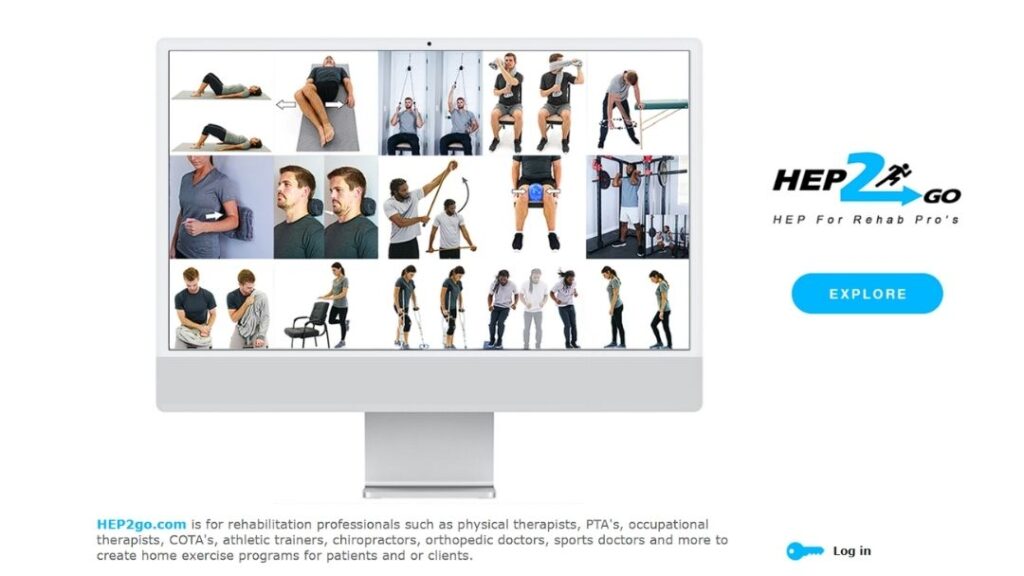
HEP2Go is one of the longest-standing home exercise program tools available. Many therapists recognize it for its free version, which allows clinicians to create exercise programs using a basic library of demonstrations.
Because of its accessibility, HEP2Go has historically been popular among students and practices looking for an HEP platform on a budget.
Best for: Clinics or students looking for a simple and low-cost HEP tool.
Why choose this platform: The free version lowers the barrier to entry for clinicians who want to test digital exercise programs without committing to a paid subscription.
| Pros | Cons |
| Free plan available | Limited advanced tracking features |
| Simple interface | Smaller feature set compared with newer platforms |
| Easy program creation | Basic patient engagement tools |
| Accessible for students and small clinics | The interface may feel outdated |
5. Wibbi

Wibbi is a digital rehabilitation platform designed to support exercise prescription, patient engagement, and clinical integration. It offers a large exercise library and tools that allow clinics to customize patient experiences.
The platform is often used by clinics that want deeper integration with electronic medical records and a structured approach to exercise delivery.
Best for: Clinics that want integration capabilities and customizable patient portals.
Why choose this platform: Wibbi’s design supports clinics that operate across multiple locations or require integrations with other practice management systems.
| Pros | Cons |
| Large exercise video database | Custom video recording is not emphasized |
| Integration capabilities | Pricing may be higher for small clinics |
| Customizable patient portals | Setup may take time |
| Useful for multi-clinic organizations | Learning curve for new teams |
6. Keet Health

Keet Health positions itself as a patient engagement and outcomes platform for rehabilitation professionals. In addition to exercise prescription, the software emphasizes communication and progress monitoring.
Many clinics use Keet Health to manage patient communication while also tracking rehabilitation progress through structured programs.
Best for: Clinics that prioritize communication and patient engagement.
Why choose this platform: Clinics that want strong communication features often appreciate Keet Health because it combines messaging with exercise prescription and outcomes tracking.
| Pros | Cons |
| Strong communication features | Smaller exercise library than some competitors |
| Patient engagement tracking | Setup may require configuration |
| Progress reporting tools | Interface may require training |
| Supports hybrid communication workflows | Minimal support for custom video recording |
7. Prehab
Prehab focuses on performance and rehabilitation programs commonly used in sports and strength training environments. The platform includes structured exercise content and programs designed to support injury prevention and rehabilitation.
Many performance coaches and sports therapists use Prehab because of its training-oriented exercise content.
Best for: Sports rehabilitation specialists and performance-focused clinics.
Why choose this platform: Clinicians who treat athletic populations may appreciate Prehab because its programs align closely with sports performance and injury prevention training.
| Pros | Cons |
| Strong sports rehabilitation focus | Less customization for clinical rehab workflows |
| Structured exercise programs | Limited clinical documentation tools |
| Educational content included | Smaller healthcare-specific feature set |
| Useful for athletic populations | Not designed primarily for medical clinics |
These platforms illustrate how HEP software for hybrid/online physical therapists continues to evolve. Some tools emphasize exercise libraries and large ecosystems, while others focus on customization and therapist-recorded content.
Choosing the right system ultimately depends on how a clinic delivers care, how much customization it requires, and how closely it wants to monitor patient progress outside the clinic.
Feature comparison for leading HEP platforms
Hybrid practices often compare tools based on workflow efficiency and patient experience.
| Feature | Recover Reel | Medbridge | Physitrack | HEP2Go |
| Custom video recording | Yes | Limited | Limited | No |
| Exercise library | Not Preloaded | Extensive | Extensive | Moderate |
| Mobile patient app | Yes | Yes | Yes | Yes |
| Compliance tracking | Yes | Yes | Yes | Basic |
| HIPAA-compliant design | Yes | Yes | Yes | Yes |
The right choice depends largely on how personalized a clinic wants its exercise programs to be.
Cost considerations for HEP software
Cost rarely equals sticker price alone. For HEP software for hybrid/online physical therapists, the true cost usually sits at the intersection of clinical time saved, patient follow-through, and how many active patients you support each month.
Most vendors price in one of three ways: per clinician seat, per active patient, or enterprise contracts. HEP2Go publicly lists low-cost tiers (including a Pro option) with pricing visible on its site. Physitrack and Medbridge typically require plan selection based on workflow needs and team size, and pricing can vary by organization.
Recover Reel publicly describes tiered pricing based on active users, starting with a free tier for up to 10 active users, with higher tiers adding additional features like more video storage space and 2-way messaging.
How to choose the right HEP software
Selecting the best HEP software for hybrid/online physical therapists requires careful evaluation of several factors. Clinics that emphasize personalized treatment often prefer systems that allow custom video recording. That capability helps therapists maintain clinical consistency even when patients complete exercises remotely.
Practice size also matters. Solo practitioners may prefer lightweight tools that focus on simplicity, while larger clinics often require integration with practice management systems.
Another important factor involves patient demographics. Older patients sometimes prefer simplified apps with clear visual instructions, while younger populations may respond well to interactive tracking features.
The table below outlines the decision factors many clinics consider.
| Practice Type | Recommended Platform Traits |
| Solo PT practice | Simple interface, affordable pricing |
| Hybrid telehealth clinic | Mobile app and remote monitoring |
| Sports rehab clinic | Custom video creation and progress tracking |
| Multi-provider clinic | Integration with EMR systems |
Mistakes hybrid clinics often make with HEP software
Most failures don’t come from the wrong platform. They come from small decisions that stack up until patients disengage. Here’s a quick map of the most common mistakes and how to prevent them without turning your workflow into a science project.
| Mistake | What tends to happen | What works better in hybrid/online care |
| Over-prescribed programs | Patients skip sessions because the plan feels unrealistic | Fewer exercises, tighter focus, clearer weekly targets |
| Generic videos for specific cases | Patients follow the video but miss your intent | Use custom exercise videos when nuance matters |
| No feedback loop | You only discover non-adherence at the next visit | Use adherence + symptom check-ins to catch issues early |
| Too many apps and logins | Patients stop opening anything at all | One patient-friendly mobile hub, when possible |
| Poor filming standards | Videos confuse more than they help | Simple filming rules: angle, lighting, one cue per clip |
| Failing to review data | Tracking exists, but never changes care | Set a weekly review rhythm for progress monitoring |
Handled well, those fixes make HEP software for hybrid/online physical therapists feel less like software and more like follow-through.
A practical path forward for hybrid PT practices
Hybrid rehabilitation models will continue to expand as patients expect flexible care options. Digital home exercise program tools are quickly becoming essential infrastructure for clinics that combine in-person and online treatment.
The most effective HEP software for hybrid/online physical therapists simplifies program creation, helps patients stay engaged, and provides therapists with clear insight into adherence and progress.
If you want to explore a platform designed around personalized video-based exercise programming, you can review the Recover Reel platform, read more about the team, or reach out directly to learn how the software works in real clinics, especially when considering a custom-branded home exercise app.
When the right HEP platform is in place, therapists spend less time managing paperwork and more time guiding patients toward meaningful recovery.