
Prehab has grown from a rehabilitation philosophy into a digital software platform that includes an exercise library and home exercise program (HEP) builder for clinicians. Yet many therapists search for Prehab alternatives because they want tools that better support patient management, home exercise programs, and personalized treatment plans within a clinical workflow.
This article explains how the Prehab platform works, what therapists typically consider when evaluating alternatives, and which physical therapy software platforms offer stronger capabilities for patient engagement, workflow efficiency, and customized rehabilitation programs.
Prehab Alternatives
Prehab began as an educational brand focused on mobility training and injury prevention. Over time, the company expanded into a software platform that includes a digital exercise library and tools that allow clinicians to create and share home exercise programs with patients.
The platform functions as a home exercise program builder supported by a large video exercise library. Clinicians can select exercises, assemble rehabilitation programs, and send those programs to patients through digital or printable formats. According to the exercise library, users can browse rehabilitation exercises organized by body region, injury type, and training goal.
Despite the popularity of the platform, some therapists begin searching for Prehab alternatives when they need software that supports broader patient management workflows. Many clinics require tools that allow them to track patient adherence, adjust exercise prescriptions quickly, communicate with patients, and maintain personalized exercise instruction.
That distinction matters in clinical practice. The home exercise program plays a central role in rehabilitation outcomes because patients complete most of their recovery work outside the clinic.
What the Prehab Platform Actually Does
The Prehab platform combines a digital exercise library with a home exercise program builder designed to help clinicians organize rehabilitation routines.
Subscribers receive access to structured exercise content that includes mobility drills, strengthening exercises, and rehabilitation progressions. Clinicians can browse exercises by body region, injury type, or training objective when creating programs.
The software allows clinicians to assemble exercise programs using the library and then share those programs with patients through digital or printable formats. Many users rely on the platform to generate rehabilitation routines based on commonly used protocols.
Because the system is built around a curated exercise library, the workflow often emphasizes selecting exercises from existing content. Therapists who prefer recording and delivering their own exercise demonstrations sometimes explore Prehab alternatives that support custom video creation and more flexible patient programming.
Why Therapists Look for Prehab Alternatives
Physical therapists rarely rely exclusively on generic exercise libraries when managing rehabilitation plans. Each patient presents a unique clinical picture that includes injury history, movement limitations, recovery goals, and training demands.
Generic programs may not always reflect those individual factors.
Many clinicians prefer platforms that allow them to record their own exercise demonstrations. When therapists demonstrate exercises themselves, they can provide precise cues, modify movements for the patient’s needs, and reinforce the clinical reasoning behind each exercise.
Another factor involves workflow efficiency. Therapists frequently modify exercise prescriptions between sessions. If a patient progresses quickly or experiences discomfort, the program may need to be adjusted immediately.
Platforms that emphasize customizable programming and mobile workflows often make these adjustments faster.
Integration also plays a role. Many clinics rely on digital systems that track patient engagement, exercise completion, and communication. When software cannot support these functions, therapists begin evaluating Prehab alternatives that better align with daily clinical workflows.
Leading Prehab Alternatives for Physical Therapy Software
Several digital platforms offer stronger capabilities for home exercise management and patient engagement. These tools allow therapists to create custom exercise programs, track adherence, and communicate with patients.
The following comparison highlights several commonly discussed Prehab alternatives used in rehabilitation clinics.
| Platform | Best Use Case | Exercise Library | Custom Video Recording | Patient Tracking | Typical Pricing Model |
| Recover Reel | Personalized therapist videos | Custom | Yes | Yes | Subscription |
| MedBridge | Large education ecosystem | Extensive | Limited | Yes | Subscription |
| Physitrack | Patient engagement analytics | Large | Yes | Advanced | Subscription |
| Wibbi (formerly Physiotec) | Large HEP library + integrations | Large | Limited | Yes | Subscription |
| HEP2Go | Simple exercise prescription | Large | Limited | Basic | Free / Paid |
| Rehab Guru | Clinic management integrations | Large | Limited | Yes | Subscription |
Each platform approaches rehabilitation software differently, which makes evaluating Prehab alternatives more nuanced than simply counting exercise videos.
1. Recover Reel: Best for Therapists Who Want More Control Of Their Patients Home Program
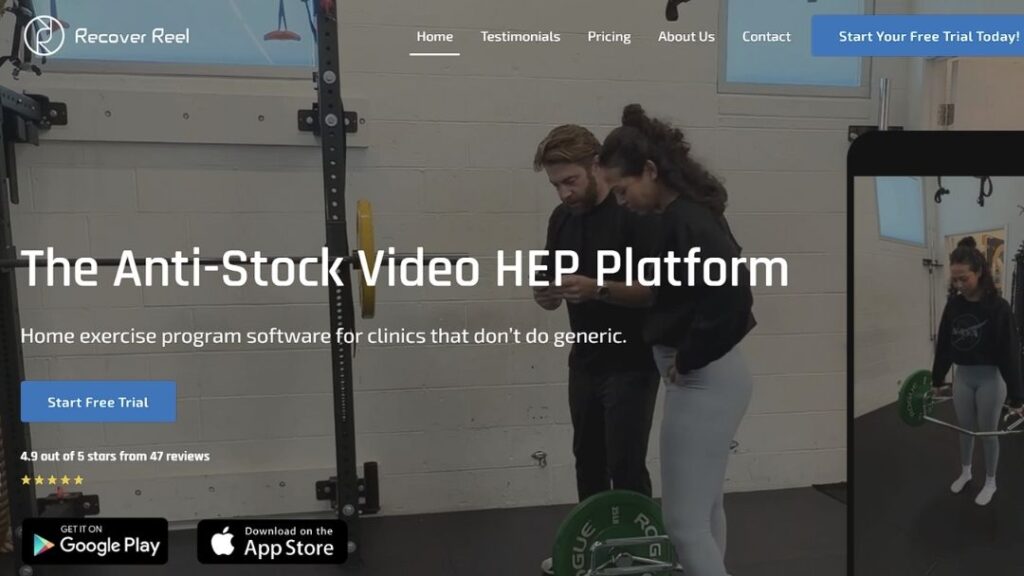
Recover Reel positions itself as an anti-stock video home exercise program platform designed for therapists who do not want to outsource their care to generic exercise libraries.
Instead of relying primarily on pre-loaded exercise databases, Recover Reel allows therapists to record their own custom exercise demonstrations directly from a mobile device and assign them to patients instantly. This approach prioritizes therapist expertise and individualized instruction rather than standardized exercise content.
Clinicians can create short demonstration videos during or after a patient session and send those videos to patients through the platform’s mobile interface. The workflow is designed to make personalized programming fast and simple.
Recover Reel also includes tools that support patient engagement, such as progress tracking, reminders, and messaging features that help clinicians monitor whether patients are completing their prescribed exercises.
For practices that emphasize individualized rehabilitation and direct therapist instruction, a mobile-first system built around custom exercise demonstrations can simplify the daily workflow of creating and updating home exercise programs.
| Feature | Recover Reel |
| Best For | Personalized therapist instruction |
| Exercise Library | Add custom videos (record your own or youtube links) |
| Custom Video Recording | Yes |
| Patient App | Yes |
| Workflow Style | Mobile-first |
Pros and Cons
| Pros | Cons |
| Personalized exercise demonstrations | No pre-loaded exercise library |
| Mobile program creation | Requires a therapist recording |
| Strong patient engagement tools with messaging and touchpoint communication built in |
2. MedBridge: Best for Large Exercise Libraries

MedBridge is one of the most established platforms in the rehabilitation software industry. In addition to its home exercise program tools, the company provides continuing education courses for physical therapists and other healthcare professionals.
The exercise library contains thousands of rehabilitation movements that clinicians can assign to patients. This large content database makes MedBridge particularly useful for clinics that rely on standardized protocols across multiple providers.
However, because the system is designed around a library model, customization options may feel more limited for therapists who prefer demonstrating movements themselves.
| Feature | MedBridge |
| Best For | Clinics needing extensive exercise libraries |
| Exercise Library | Very large |
| Custom Video Recording | Limited |
| Patient App | Yes |
| Workflow Style | Library-based |
Pros and Cons
| Pros | cons |
| Extensive exercise database | Higher subscription cost |
| Continuing education resources | Less personalization |
| Established reputation | Desktop-heavy workflow |
3. HEP2go: Best Budget-Friendly Exercise Program Tool
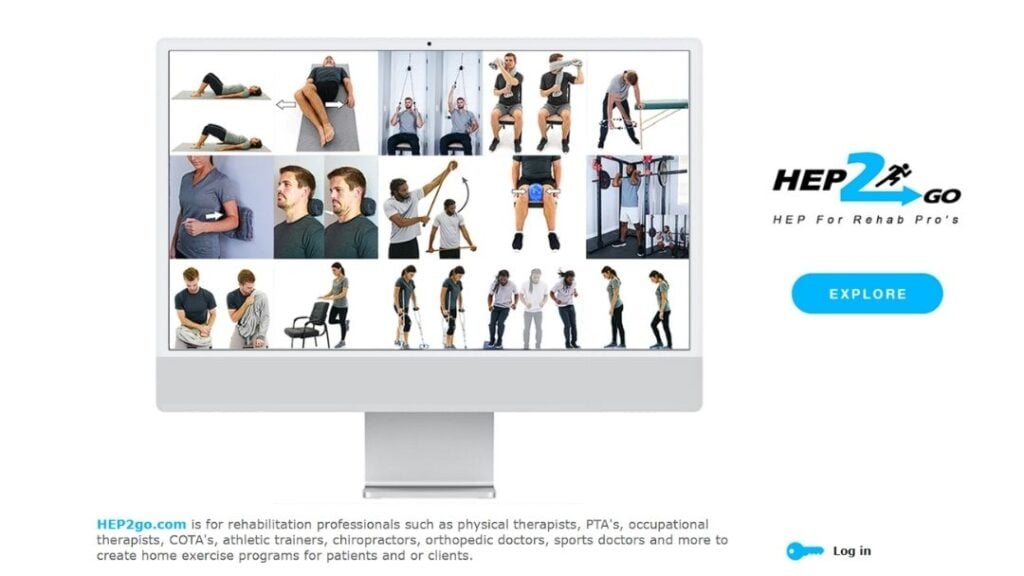
HEP2Go is one of the oldest digital home exercise program generators used by physical therapists. The platform focuses on simplicity and accessibility rather than advanced patient engagement tools.
Clinicians can quickly assemble exercise plans using the built-in exercise library and generate printable or digital program sheets for patients.
Because the system is relatively basic compared with newer HEP platforms, it may lack advanced tracking features. However, its affordability makes it appealing to small clinics or solo practitioners.
| Feature | HEP2Go |
| Best For | Budget-conscious clinics |
| Exercise Library | Moderate |
| Custom Video Recording | No |
| Patient App | Limited |
| Workflow Style | Simple program generator |
Pros and Cons
| Pros | Cons |
| Affordable pricing | Limited engagement tools |
| Easy program creation | Outdated interface |
| Accessible for small clinics | Minimal customization |
4. Physitrack: Best for Patient Monitoring and Telehealth
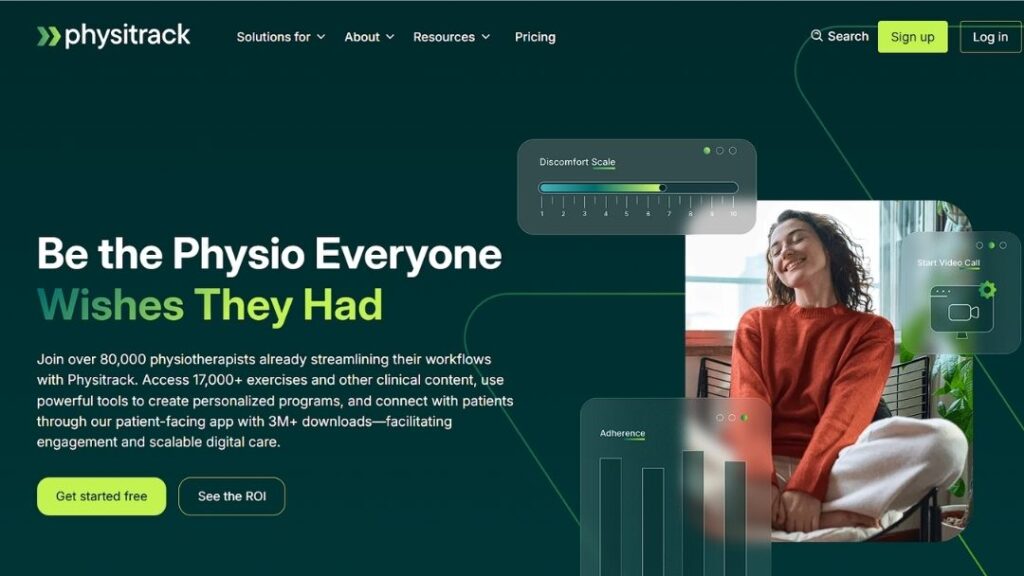
Physitrack focuses heavily on patient monitoring and rehabilitation analytics. The platform allows therapists to assign exercises while tracking adherence, pain scores, and progress metrics.
Clinicians can review detailed reports that show whether patients complete assigned exercises between appointments. These analytics tools can help therapists identify patients who may require additional guidance or adjustments to their recovery plan.
Physitrack also includes telehealth features, making the platform appealing to clinics that offer remote consultations.
| Feature | Physitrack |
| Best For | Data-driven patient monitoring |
| Exercise Library | Large |
| Custom Video Recording | Limited |
| Patient App | Yes |
| Workflow Style | Analytics-focused |
Pros and Cons
| Pros | Cons |
| Strong adherence tracking | Higher learning curve |
| Telehealth support | Library-dependent |
| Detailed analytics | Pricing may increase with scale |
5. Wibbi: Best for Integrated Rehabilitation Workflows
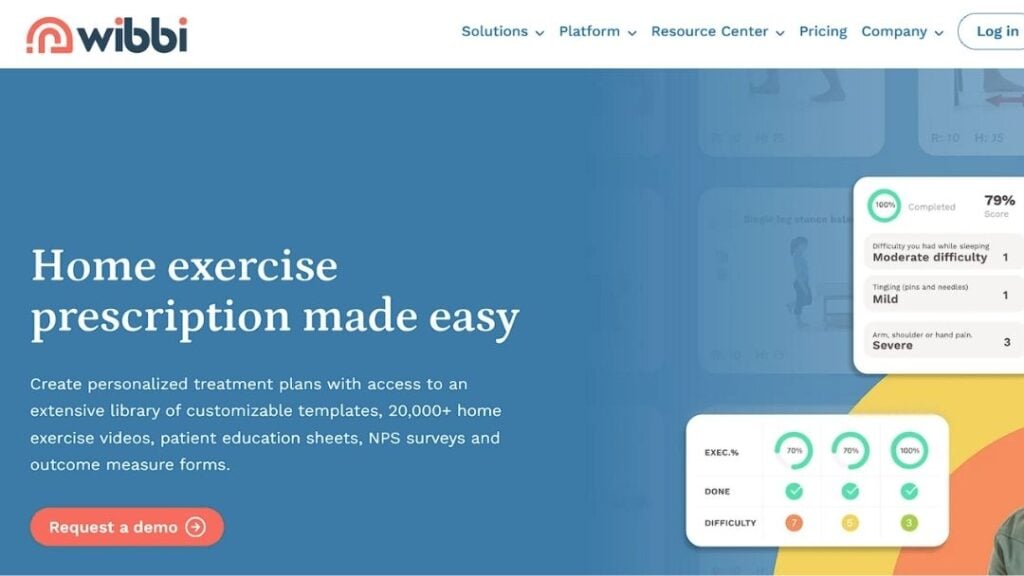
Wibbi is designed to integrate rehabilitation programming with other clinic management systems. The platform allows therapists to assign exercises while tracking patient outcomes and progress.
Many clinics appreciate Wibbi’s ability to integrate with electronic medical record systems, thereby reducing administrative workload and streamlining documentation.
While the platform provides a useful exercise library, its main strength lies in connecting rehabilitation tools with broader clinical workflows.
| Feature | Wibbi |
| Best For | Clinics requiring EMR integration |
| Exercise Library | Moderate |
| Custom Video Recording | Limited |
| Patient App | Yes |
| Workflow Style | Integration-focused |
Pros and Cons
| Pros | Cons |
| EMR compatibility | Smaller user base |
| Remote monitoring features | Less mobile optimization |
| Clinic workflow support | Limited branding options |
6. Rehab Guru: Best for Outcome Reporting
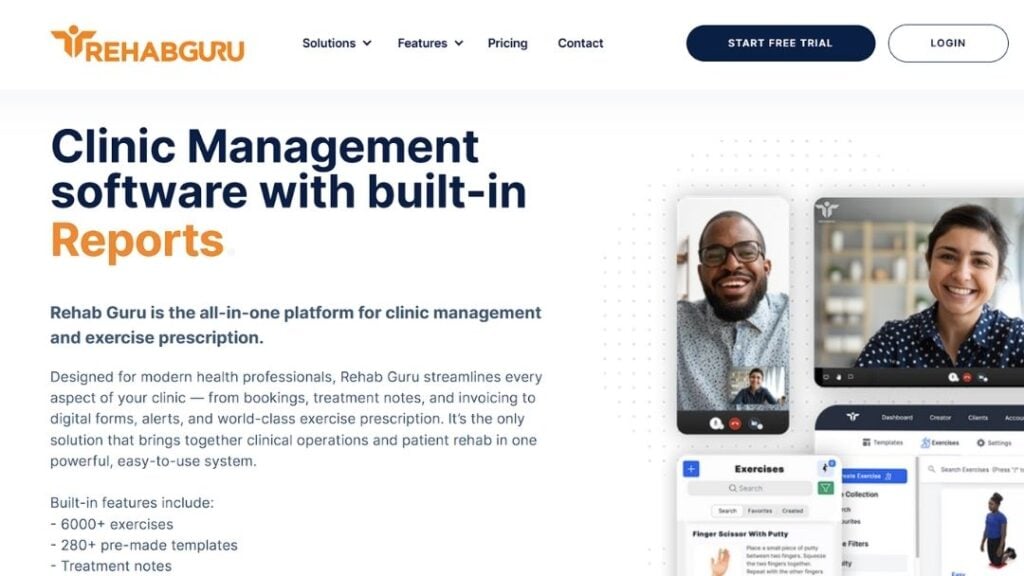
Rehab Guru combines exercise prescription tools with detailed reporting features that allow therapists to evaluate treatment outcomes across multiple patients.
Clinicians can monitor progress metrics and generate reports that track rehabilitation performance over time. These analytics capabilities can help clinics evaluate treatment effectiveness and refine rehabilitation protocols.
The platform includes a large exercise database, though its interface may require some time to learn for new users.
| Feature | Rehab Guru |
| Best For | Clinics focused on outcome tracking |
| Exercise Library | Large |
| Custom Video Recording | Limited |
| Patient App | Yes |
| Workflow Style | Reporting-focused |
Pros and Cons
| Pros | Cons |
| Outcome reporting tools | Learning curve |
| Detailed analytics | Higher subscription tiers |
| Broad exercise library | Less mobile optimization |
Prehab reviews: what clinicians say online
Discussions about Prehab show up often in clinician communities and forums. Some clinicians praise the depth of the exercise library and the convenience of ready-made demos, while others prefer tools that make it easier to deliver therapist-recorded instruction and workflow-first program design.
Several reviews highlight the platform’s strong content library. However, clinicians who prioritize customization sometimes express frustration with limited personalization options. These experiences appear in various prehab guys review discussions, where therapists compare the system with modern HEP platforms.
When examining any prehab review across professional communities, the same theme emerges. The platform works well for structured exercise libraries but may not fit clinics that want individualized patient instruction.
Prehab vs Modern HEP Platforms
The main distinction between Prehab and newer software platforms lies in how programs are created. Prehab relies primarily on a content library model. Modern tools often prioritize therapist-generated content and mobile workflows.
| Category | Prehab Platform | Modern HEP Platforms |
| Exercise Source | Library-based | Custom videos or mixed |
| Personalization | Moderate | High |
| Workflow | Desktop content library | Mobile and desktop program creation |
| Patient Tracking | Basic | Advanced engagement |
This difference explains why therapists frequently search for Prehab alternatives. Many clinicians prefer systems that allow them to maintain direct control over patient education and instruction.
Choosing the Right HEP Software for Your Clinic
Every rehabilitation clinic operates differently. Large hospital networks often prioritize standardized protocols and extensive exercise libraries. Smaller practices, especially cash-based clinics, may prefer tools that support personalized instruction.
The cost of these platforms also varies. Understanding the HEP software cost helps you to understand the pricing structures that depend on the number of patients, features, and integrations required.
When evaluating Prehab alternatives, therapists should consider how the platform supports patient communication, workflow efficiency, and exercise clarity. Software that aligns with daily clinical routines usually produces the best results. Clinicians interested in learning more about the team behind one of these platforms can review the company background.
Where Therapists Go From Here
The search for Prehab alternatives reflects a larger shift within physical therapy. Clinics no longer rely solely on printed exercise sheets or generic libraries. Digital platforms now allow therapists to guide recovery programs with far greater precision.
Each software platform reviewed above serves a different type of clinic. Some emphasize large exercise libraries. Others prioritize customization or analytics. The right choice depends on how therapists deliver care and how patients interact with their rehabilitation plans.
For therapists who prefer personalized exercise programs and direct patient guidance, exploring a platform designed for custom video programming may be worthwhile. Clinics interested in learning more or requesting additional details can directly contact us and learn more about the approach. Care doesn’t stop at the door. The right software makes sure it doesn’t disappear either.