
Most HEP2go alternatives fall into two camps: large exercise libraries or tools built for personalized care. Clinics that focus on patient compliance usually lean toward video-based, mobile-first platforms.
This article reviews the top HEP2go alternatives by comparing features, strengths, limitations, and ideal use cases for physical therapists, occupational therapists, and movement professionals. The goal stays simple: help you choose home exercise program software that actually supports treatment plans, patient engagement, and long-term outcomes.
HEP2go alternatives: Comprehensive review of top HEP software options
HEP2go alternatives refer to home exercise program software options that clinics use when basic exercise handouts or static libraries no longer support patient compliance or modern treatment plans. These tools exist to help physical therapists deliver clearer instructions, track adherence, and maintain continuity of care beyond the clinic visit.
Searching for HEP2go alternatives usually starts with one frustration. The exercises look right on paper, yet patients struggle with proper form, skip sessions, or lose the handout altogether. That gap between prescription and execution explains why clinics now evaluate home exercise program software based on how well it supports real-world patient care rather than how many exercises sit in a library.
What makes home exercise program software essential for clinics
Home exercise programs no longer function as optional add-ons. The patient’s adherence to unsupervised programs averages below without structured follow-up or digital reinforcement. Digital HEP platforms address that gap by combining treatment plans, visual guidance, reminders, and progress tracking in one place.
Clinics that understand what HEP software is and the long-term benefits of HEP software usually notice higher patient engagement, clearer communication, and fewer setbacks caused by incorrect technique. That matters not only for physical therapy, but also for occupational therapy home exercise program delivery, where precision and repetition drive outcomes.
Top HEP2go alternatives
Before breaking down individual platforms, two trends stand out. First, free home exercise program tools are often clogged with bloated exercise libraries and provide static handouts rather than an elevated patient experience. Second, paid home exercise program software increasingly prioritizes video-based instruction, mobile access, and HIPAA-compliant communication. That distinction shapes how each alternative performs in real clinics.
1. Recover Reel: Best for personalized custom video recording and tracking
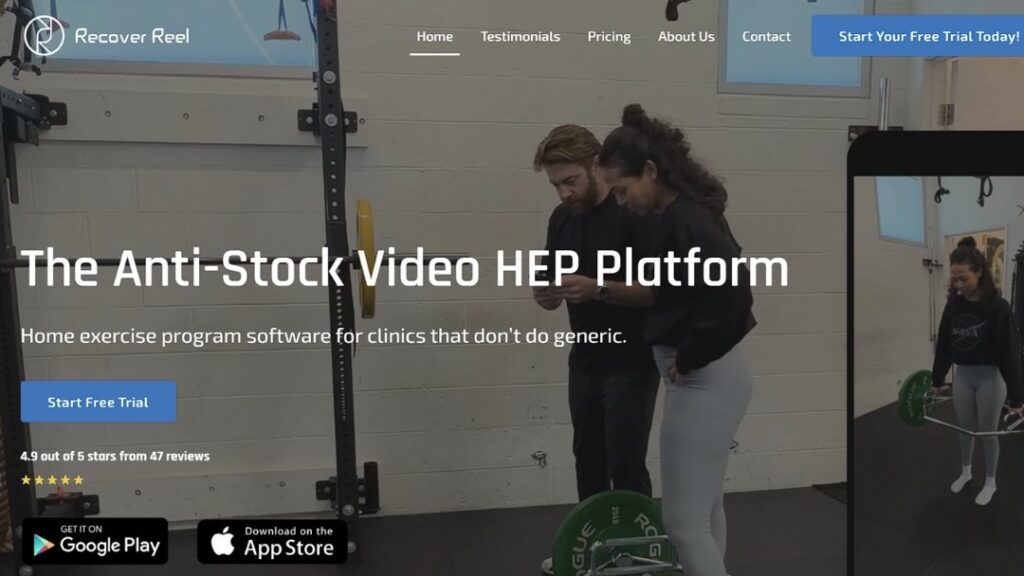
Recover Reel positions itself as the opposite of generic exercise libraries. Instead of browsing thousands of stock videos, physical therapists can either pre-record exercises with their voice and coaching cues or record a personalized video for each patient. Recover Reel design reflects how clinicians actually coach in the clinic, using their own cues, pacing, and progressions.
The platform focuses on mobile-first workflows. Therapists can prescribe exercises, update treatment plans, and monitor patient compliance without returning to a desktop system. Patients receive clear visual instructions, which improve outcomes and reduce guesswork at home. Clinics interested in modern physical therapy home exercise program software often view this approach as closer to real care delivery than library-based tools.
Recover Reel works best for PTs, OTs, and movement professionals who want full control over how exercises appear and how patient progress unfolds. Clinics that value personalization over volume tend to choose it after comparing free vs paid HEP software.
Pros & Cons
| Pros | Cons |
| Personalized video recorded by the therapist | Smaller pre-loaded library by design |
| Strong patient engagement and clarity | Not ideal for high-volume clinics that worry less about patient outcomes |
| Mobile-first design for fast updates | Requires clinicians to record content |
| Supports individualized patient care | Less suited for high-volume generic workflows |
2. MedBridge: Best overall with extensive educational content

MedBridge remains one of the most recognized HEP2go alternatives. Its strength lies in combining a large exercise library with patient education, outcomes tracking, and continuing education content. For clinics that want an all-in-one education ecosystem, this breadth proves attractive.
MedBridge suits multi-provider clinics that manage diverse treatment plans and prefer standardized exercise content. The trade-off appears in customization. While effective for scale, some therapists find it less flexible for individualized video instruction, particularly when coaching nuanced movements.
Pros and Cons
| Pros | Cons |
| Large, clinically vetted exercise library | Limited customization for individual patients |
| Integrated patient education resources | Higher pricing for smaller clinics |
| Strong outcomes and reporting tools | Can feel overwhelming for solo PTs |
| Well-established platform | Less mobile-first in daily use |
3. Exercise Pro Live: Best for built-in reporting and filters
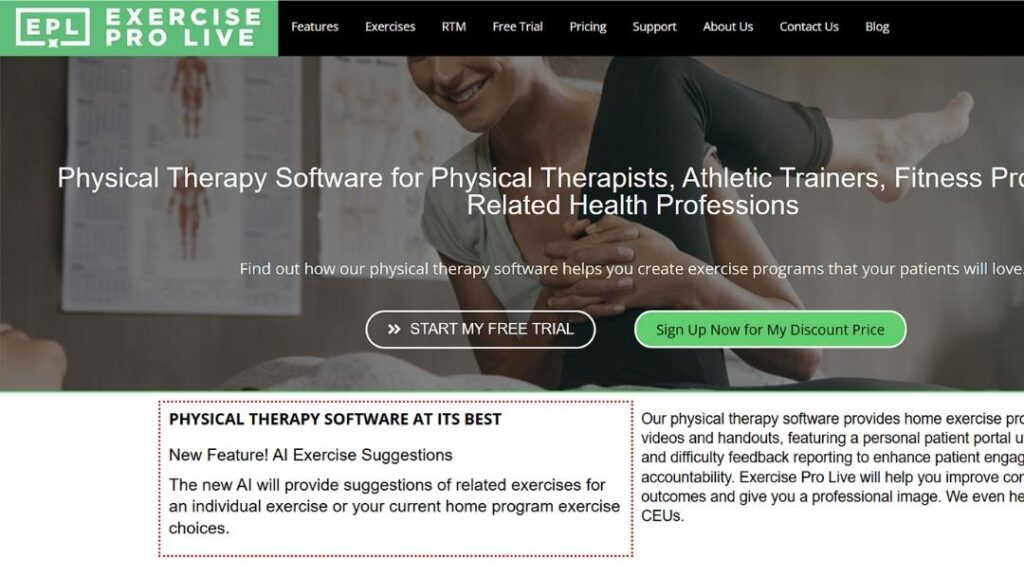
Exercise Pro Live appeals to clinics that rely heavily on search filters and reporting. Its structured database allows therapists to prescribe exercises quickly based on body region, diagnosis, or movement pattern. That efficiency explains why it often appears in discussions around hep programs and home exercise 2 go tools.
The platform works well for clinics that value documentation and consistency. However, its interface feels more administrative than patient-centric, which may affect engagement for tech-savvy patients.
Pros and Cons
| Pros | Cons |
| Advanced exercise search and filters | Interface feels dated |
| Detailed reporting options | Less focus on patient engagement |
| Large multimedia exercise database | Limited personalization |
| Useful for standardized treatment plans | Mobile experience is basic |
4. Physitrack: Best for remote engagement and analytics
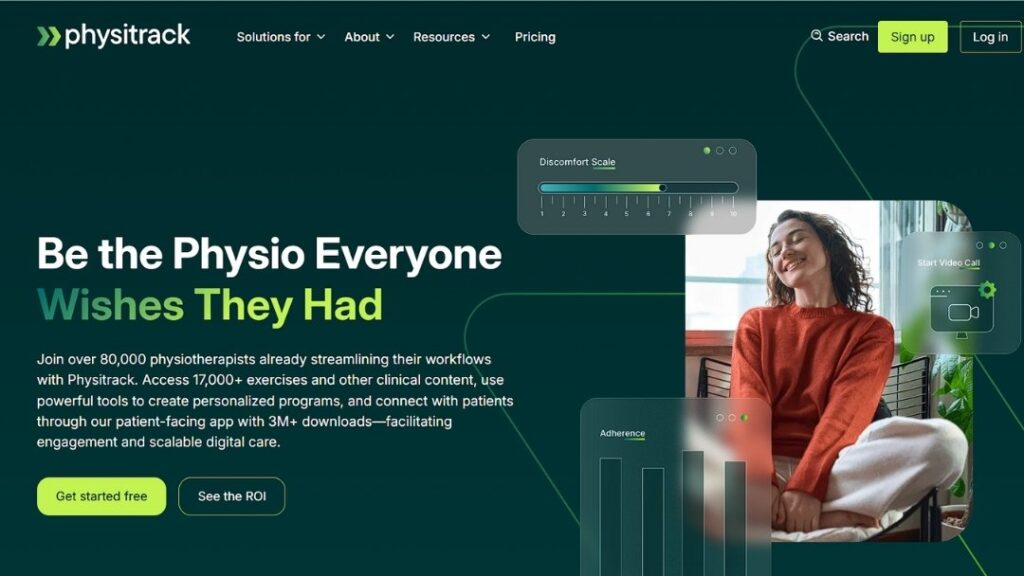
Physitrack emphasizes remote monitoring and real-time progress updates. Patients can report adherence, pain levels, and completion status, giving therapists insight between visits. This approach supports telehealth models and clinics that manage hybrid care.
Physitrack suits practices that track outcomes closely and want measurable compliance data. Some therapists note a learning curve during onboarding, especially for patients unfamiliar with digital tools.
Pros and cons
| Pros | Cons |
| Real-time progress tracking | Steeper learning curve |
| Strong remote patient monitoring | Setup takes time for clinicians |
| Telehealth-friendly features | Higher cost for advanced plans |
| Data-driven adherence insights | Can feel complex for simple needs |
5. Rehab Guru: Best all-in-one clinic management with HEP
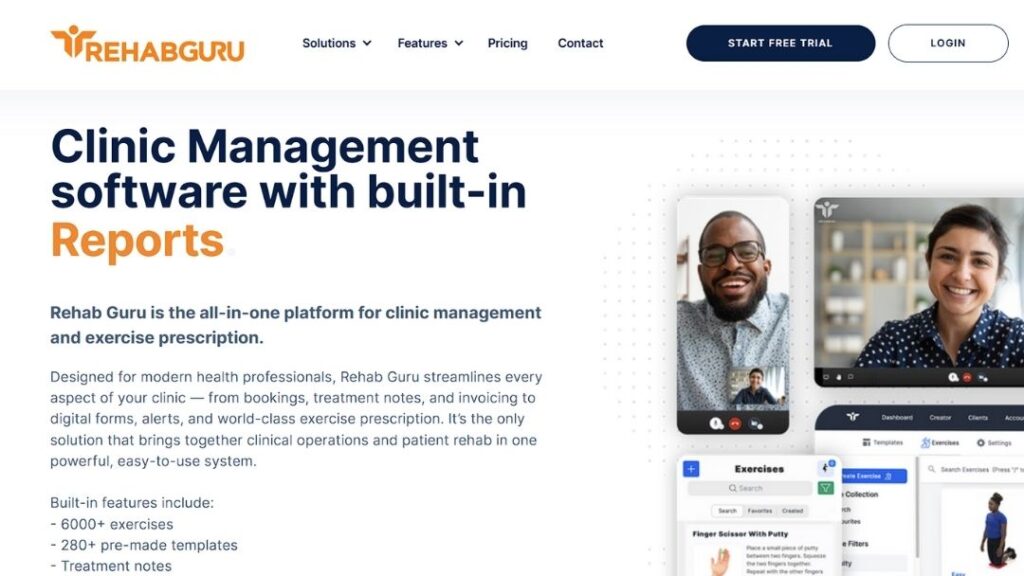
Rehab Guru combines home exercise programming with scheduling, messaging, and telehealth features. Clinics looking to reduce software sprawl often consider it as a single platform solution.
Its broad scope benefits multidisciplinary practices, including occupational therapists who manage complex workflows. That same scope can feel overwhelming for solo clinicians who only need streamlined exercise software.
Pros and Cons
| Pros | Cons |
| Combines HEP, scheduling, and messaging | More complex than HEP-only tools |
| Suitable for multidisciplinary clinics | Overkill for solo practices |
| Supports telehealth workflows | The interface can feel busy |
| Broad feature set | Requires onboarding time |
6. HEP Builder: Best free option for basic HEP needs
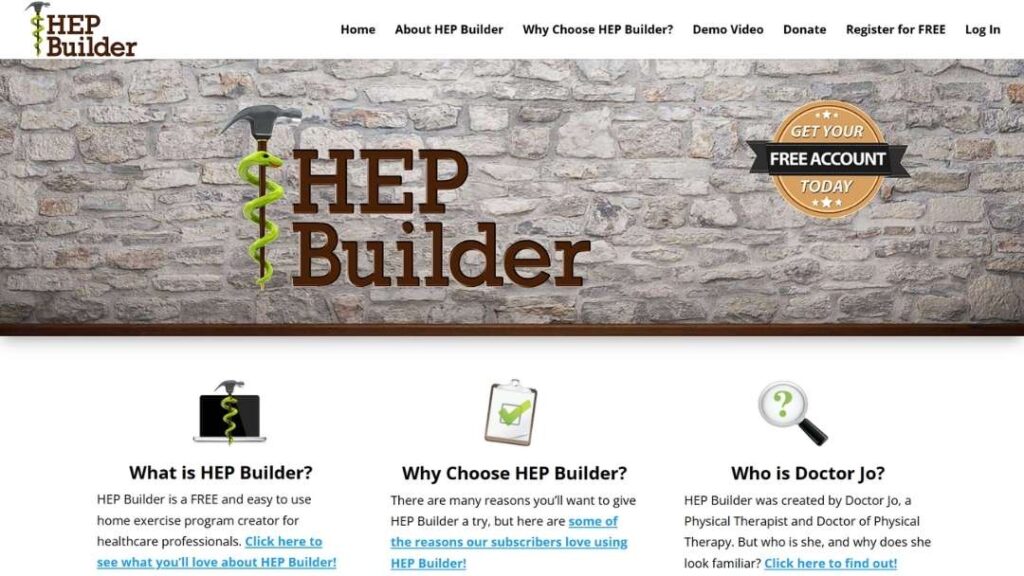
HEP Builder represents the free end of the spectrum. It allows clinicians to create printable programs quickly, which explains its popularity among those searching for free home exercise program physical therapy options.
The limitation lies in engagement. Without reminders, tracking, or video-based guidance, patient compliance depends heavily on motivation and memory.
Pros and Cons
| Pros | Cons |
| Free to use | No patient progress tracking |
| Quick program creation | No reminders or engagement tools |
| Simple for printed handouts | Limited digital experience |
| Low barrier to entry | Not scalable for growing clinics |
7. Limber Health: Best for premium video and engagement
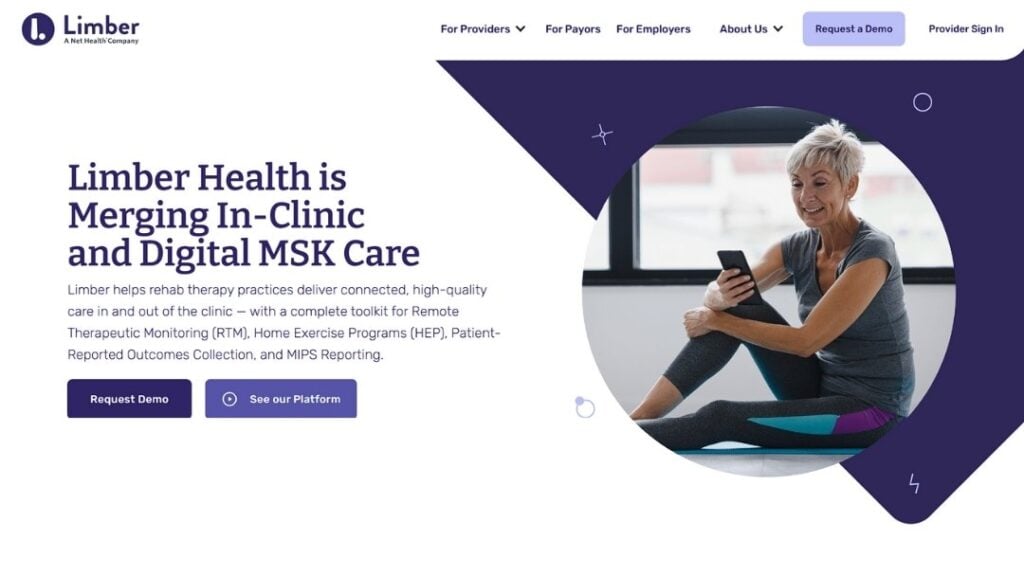
Limber Health focuses on high-quality video content and patient interaction. Its polished visuals and engagement tools appeal to clinics that want a premium patient experience.
The platform often suits larger organizations with higher budgets. Smaller clinics may find the pricing difficult to justify compared with more focused tools.
Pros and Cons
| Pros | Cons |
| High-quality, professionally produced videos | Enterprise-level pricing |
| Strong patient engagement tools | Less flexible for customization |
| Modern user interface | Not ideal for small clinics |
| Scales well for large organizations | Can feel heavy for basic needs |
Top HEP2go alternatives side by side
| Platform | Best For | Core Strength | Main Limitation |
| Recover Reel | Custom care delivery | Gives therapists the most control over their treatment and outcomes | No stock exercise library |
| MedBridge | Large clinics | Education depth | Cost |
| Exercise Pro Live | Structured reporting | Filters & reports | Outdated UX |
| Physitrack | Remote monitoring | Analytics | Learning curve |
| Rehab Guru | All-in-one needs | Broad features | Complexity |
| HEP Builder | Free users | No cost | Minimal features |
| Limber Health | Premium clinics | Video quality | Price |
What HEP software features really make a difference
Not all home exercise program software solves the same problems. Some tools focus on scale, others on structure, and a few on behavior change. The features that actually move outcomes tend to influence what happens after the patient leaves the clinic. That’s where most programs break down. That’s usually where the system either supports the therapist or quietly works against them.
Clinics that evaluate HEP2go alternatives carefully often notice that patient results improve when software supports clarity, accountability, and follow-through rather than sheer exercise volume. A larger library doesn’t help if patients don’t know exactly how their therapist wants the movement performed.
| Feature | Why it matters in real practice |
| Personalized video instruction | Seeing their own therapist demonstrate movements helps patients maintain proper form and confidence at home |
| Mobile-first access | Patients are more likely to open an app than search for printed handouts or PDFs |
| Adherence tracking | Visibility into patient completion allows therapists to adjust treatment plans early |
| Automated reminders | Consistent prompts reduce missed sessions and support habit formation |
| Easy program updates | Fast edits prevent outdated exercises from lingering in a patient’s plan |
| HIPAA-compliant communication | Secure messaging keeps patient care compliant while maintaining continuity |
| Simple patient interface | Fewer steps lead to higher engagement, especially among older patients |
Clinical research supports this direction. Studies show that visual instruction paired with structured follow-up leads to higher adherence and fewer execution errors in home exercise programming. In plain terms, patients do better when guidance feels personal and timely. In contrast, static or generic programs rely heavily on patient motivation alone, which is rarely consistent outside the clinic.
That difference explains why clinics comparing home exercise program software to free tools often conclude that engagement features outweigh cost savings over time. Lower upfront costs can quietly lead to higher drop-off rates and slower progress.
Choosing the right alternative for your practice
The best HEP2go alternative depends less on feature lists and more on how your clinic actually operates. A solo physical therapist running a cash-based practice faces different constraints than a multi-provider clinic managing hundreds of patients each week. That distinction gets overlooked far too often in software comparisons.
Smaller practices usually prioritize speed, ease of use, and flexibility. Tools that allow therapists to prescribe, modify, and review programs from a phone often fit better into busy schedules. When software adds friction, it tends to get used less, even if it looks impressive on paper. For these clinics, overly complex dashboards or large exercise libraries can slow things down rather than help.
Larger clinics and multidisciplinary practices often look for consistency and reporting. Occupational therapists, for example, may need structured workflows that support fine motor skills, daily living tasks, and long-term progression tracking. In these environments, standardized libraries and documentation tools can reduce variability across providers, especially when multiple clinicians touch the same patient’s plan.
Patient demographics also influence the decision. Older patients tend to respond better to simple interfaces and clear visual cues, while younger patients expect mobile access, reminders, and real-time feedback. When expectations match the delivery method, compliance usually follows without extra effort from the therapist.
One factor cuts across all practice types: compliance. Any platform used for a physical therapy home exercise program must support secure communication and data handling. HIPAA compliance is not optional, especially when messaging, progress data, or personalized video enters the workflow. Cutting corners here creates a risk that outweighs any convenience.
Clinics that take time to match software capabilities with their care model usually report fewer drop-offs, clearer communication, and stronger carryover between visits. That alignment, not feature count, is what determines whether a platform becomes part of daily practice or quietly fades into the background.
Why this comparison matters, and where to go next
Choosing among HEP2go alternatives shapes how patients experience care outside the clinic. Tools that emphasize personalization, clarity, and accountability tend to support better outcomes than one-size-fits-all libraries. The difference often shows up weeks later, when progress either compounds or stalls.
Clinics exploring modern approaches often start by reviewing the philosophy behind platforms like Recover Reel, learning how therapist-led instruction fits into their workflow, and then deciding whether custom video-based care aligns with their treatment standards. For many, that question comes down to control: who defines the exercise, and how clearly it’s delivered.
If your practice values individualized treatment plans and stronger patient engagement, exploring a platform built around therapist-led instruction may help. Starting a direct conversation is often the fastest way to see whether that approach fits your clinic’s reality.